Reflections on Russ - "From Set Shot to Slam Dunk"
From Set Shot to Slam Dunk: The Glory Days of Basketball in the Words of Those Who Played It was written by Charles Salzberg and published in 1987. The book is a basketball treasure, as it relates the history of professional basketball from the 1930s to the 1960s, with first person accounts from eleven players who played in the NBA in that era and three individuals who were affiliated with the league/game in some capacity. The fourteen individuals interviewed were Moe Goldman, Sidney "Sonny" Hertzberg, Nat "Feets" Broudy, Robert Davies, Slater Martin, "Easy Ed" Macauley, Dolph Schayes, Nat "Sweetwater" Clifton, Bill Sharman, George "the Bird" Yardley, Norm Drucker, Johnny "Big Red" Kerr, Cal Ramsey, and Jerry West.
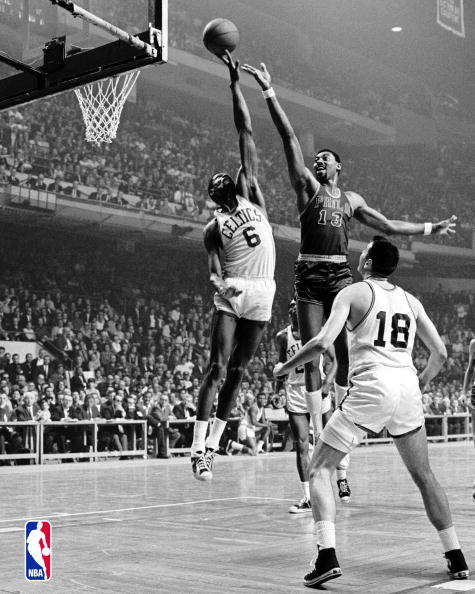
From Set Shot to Slam Dunk has many powerful stories that need to be highlighted. I've toyed with creating a blog on each of the individuals who were interviewed. I may still do that, but I wanted to make my first blog post from the book about the greatest winner in NBA history, William Felton Russell. Rarely is Bill Russell mentioned when modern day basketball fans debate who's the greatest player of all-time. Many question if he could be as dominant in today's NBA as he was when he played. I contend that greatness transcends generations, especially when evaluating players who played in the NBA from the 1960's and on. A 15 second clip on youtube of Bill Russell is an eye-opener on Russell's athletic greatness.
I recently listened to an excellent interview by Michael Tillery of the legendary Boston Globe reporter, Bob Ryan, who expressed how difficult it is to explain the greatness of Bill Russell to modern day fans. Ryan highlighted Russell's basketball intelligence, competitiveness, lateral mobility, and quickness to the ball as key factors in why he was a dominant player in his era and why he would still be a player of impact in today's game.
"Easy Ed" Macauley on Bill Russell:
 "Easy Ed" Macauley played in the NBA from 1949 to 1959 and was inducted into the Naismith Memorial Basketball Hall of Fame in 1960. Macauley is also remembered for being one of two players (Cliff Hagan) traded by Boston in 1956 to the St. Louis Hawks for the rights to Bill Russell. Probably one of the most interesting stories in all of basketball concerns the trade that sent Bill Russell to Boston in exchange for me and Cliff Hagan. Not many people know the real story, but it could have changed the course of professional basketball, in that I don't think the Celtics would have won ten out of eleven or eleven out of twelve championships without Russell. If he'd stayed in St. Louis, I don't know that St. Louis would have either. But I don't think Boston would have because Russell was absolutely perfect for that ball club. Cousy, Sharman out there in the backcourt stealing balls with Russell behind them, stopping everybody. Heinsohn, Loscutoff. They didn't have a great defensive club, but with Russell back there you didn't need one because no one could get closer than fifteen feet. We played them a couple of times when Russell wasn't in the lineup, and they were just an ordinary ball club. With him, they were just superb.
But getting back to the trade, that March just before the play-offs started, my son, Patrick, who was just under one year old, had a cold. He'd had problems with his kidneys when he was born, had taken a lot of penicillin, and we thought we'd lose him. Anyway, the doctor said, "He has a cold, but I don't want to give him penicillin because he's had so much." We took him home, and half an hour later he was in convulsions. We took him to the hospital and were told that he had spinal meningitis. He had a very high fever and wound up with his brain completely destroyed. He was cerebral palsy, never could talk, walk, or think. He spent the rest of his life in a crib, wearing diapers, he could only roll over [Patrick died at the age of fourteen].
So now the season is over and I've really got a problem. My wife, Jackie, and I are back in St. Louis and the draft meeting is in April or May. Walter Brown called me and said, "I'm at the draft meeting and Red wants to make a deal to send you and Cliff Hagan to St. Louis in exchange for Bill Russell, but I don't want to make the deal. I can't imagine the Celtics without you."
To this day, I'm thoroughly convinced that if I'd said "I can't imagine not playing with the Celtics," there never would have been a deal. But I said to Walter, "I've got a problem. We don't know if our son will recover. I'd love to stay with the Celtics and if you were trading me to any other club, I'd say no. But I was born and raised in St. Louis, my wife is from there, we've got a problem with Patrick, and if you made the deal with St. Louis you'd really be doing me a favor." He said, "Okay. I just wanted to check, because if you didn't want to go we wouldn't make the deal." And that's how the deal was made.
I think Bill Russell was a fantastic player. I disagree with some of his philosophies. He doesn't sign autographs. He didn't go back to the Hall of Fame to accept the honor of being inducted. I think that's bush league. But I'll say this, he was the most dominant player to ever play the game. There have been a lot of ballplayers who are better, individually, better shooters, dribblers, rebounders. But no one individual who could put it all together was as important to a particular team as Bill Russell was. In 1957, the Celtics won their first championship. That was my first year with the Hawks. We played them in the finals. The Celtics won in seven games by one point, I guess, or maybe it was in overtime. The next year the Hawks won the championship against the Celtics because, I think, we had a better ball club, had more desire, were better coached and because Bill Russell sprained his ankle in the third game and couldn't play. If Russell had not sprained his ankle and had been in the lineup - and I don't mean to take anything away from our ball club - I really don't think we would have won the title. The guy was that important.
Nat "Sweetwater" Clifton on Bill Russell:
Nat Clifton played professional basketball from 1945-1961. In 1950, Clifton, Earl Lloyd, and Chuck Cooper became the first Black men to play in the NBA.
I would have to say that Bill Russell was the most difficult player to play against. At that time we didn't understand Russell because he brought something into the league that we wasn't used to. He was a guy with perfect timing. He'd wait until you released the ball. See, all Russell did was stand back under the basket, you understand, and wait for the player to come to him. And then when you were ready to shoot he would come up and hit the ball some kind of way. I don't think he could handle some of the big guys in the league now, but he did then. I was six-six and he could block my shot. 
Bill Sharman on Bill Russell:
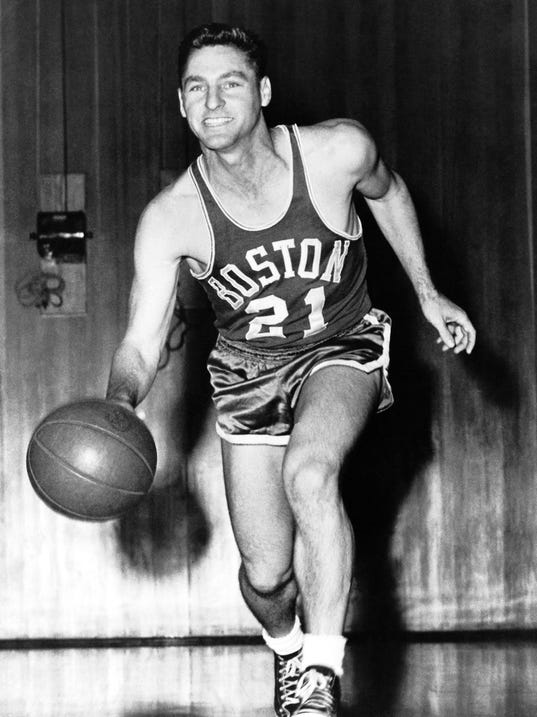 Bill Sharman played in the NBA from 1951 to 1961. He was Russell's teammate when he joined the Celtics in 1956. Sharman coached in the NBA and was also a general manager and executive with the Lakers for many years. He was enshrined in the Naismith Memorial Basketball Hall of Fame as a coach and player.
 Finally, in 1956, we got Bill Russell in a trade with St. Louis for Ed Macauley and Cliff Hagan, and, as the old saying goes, "The rest was history." Russell's tremendous skills in rebounding, defense, and shot blocking were exactly what we needed and we started a dynasty that has not been equaled or matched in any other professional sport today.
I'd also like to mention that Boston drafted Tom Heinsohn and got Frank Ramsey out of the service the same year that Bill Russell joined the team. Both were super players that are now in the Hall of Fame. Plus, we had many other great players on that club, which made us the deepest team in the league. I actually believe that the 1956/57 championship Celtic club was the beginning of an era that emphasized and stressed the value of the fast break that has come to represent the style of modern-day basketball that has become the most effective system used today. Before Boston developed this technique of pushing the ball up-court and running at every opportunity, the old style was more of a deliberate slow-down, set-up system that would seldom fast-break.
So, with the addition of Bill Russell, who could control the boards, it allowed us the opportunity to take off early and gamble on the running attack, which was responsible for a lot of easy baskets. Therefore, with Auerbach's coaching, Russell's rebounding, and Cousy's playmaking, the first truly complete fast-break system was developed and refined. Accordingly, I believe these three people deserve most of the credit for starting this style that has become the most dynamic offensive system in basketball history.
George "Bird" Yardley on Bill Russell:
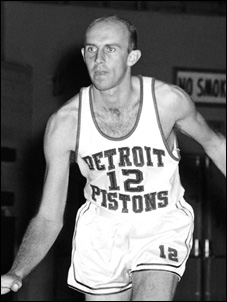 George Yardley played in the NBA from 1953 to 1960. Nicknamed "Bird," the Stanford graduate was inducted into the Naismith Memorial Basketball Hall of fame in 1996.
There's no question that Bill Russell's coming into the league changed the game. You just couldn't take a lay-up against him. He just took that portion of the game away from you. That meant that your man could let you go in for a lay-up. He could play up on you more and force you to go around him. Then, if you didn't stop to take a jump shot, you were going to get it blocked underneath. He was certainly the most intimidating, most dominant person that played sports. But there is one thing that always impressed me. Russell played in the 1956 Olympics and he didn't come to the Celtics until late December, at which point they were 18 and 1, with Tommy Heinsohn as an addition to the team. I've always felt that Boston would still have been the dominant team in basketball, even without Russell, because Heinsohn was exactly what Cousy needed. The disastrous team would have been St. Louis if Russell had never been traded to the Celtics. They might never have lost a game, what with him and Pettit on the same team. As a matter of fact, if I were starting a team and had my choice between Russell and Pettit, I would take Pettit over Russell. I think he was the better basketball player and could do more things. He rebounded as well as Russell. He didn't block shots, but he scored considerably more. He was very unselfish and a much more likable person. Bob is one of my favorite people. Teammates always gathered around him. And, at the end of a game, he was just like Jerry West. He'd shoot the ball and then go after it. He seldom missed a rebound in the last few minutes of a game. He might take five shots, but eventually he'd get it into the basket. Had he and Russell played on the same team, it would have been outrageous.
Mel Hutchins was by far the best defensive basketball player that ever lived, better than Russell and all of them. Russell could not play defense man-to-man. I scored 52 points on him twice. I just loved to see him coming. But when he was waiting for me there under the basket, well, I was lucky to get 10 points. But as an individual defensive player, Hutchins was the best.
Slater Martin On Bill Russell:
Slater "Dugie" Martin played in the NBA from 1949 to 1960 and was inducted into the Naismith Memorial Basketball Hall of Fame in 1982.

When I came to St. Louis Red Holzman was coach. Of course, with every team I'd ever been on, I'd run it. I said,"You gotta get rid of Hagan. He's a forward, put him down in the corner. So we put him in the corner and that was the end of that. He started developing into a tremendous basketball
player. Ed Macauley was there, too. Kerner traded Russell for Hagan and Macauley. Mr. Kerner had the rights to Russell but he wanted the team to get started, to build it up, and he did by getting Hagan and Macauley for Bill Russell. They didn't know if Russell was going to play pro ball or not.
I very much enjoyed playing with the St. Louis team. We were very close and we had a good ball club. The first year I was there we played Boston. It was '56/57 and they beat us in double overtime. We should have won that game, that series. Then we beat them the next year and they claimed Russell was hurt. They were using that as an excuse. Then they beat us again the next year for the Championship. So we played 'em like four years in a row for it. We could have beat them two out of the four years, since we took 'em to overtime. But they had a great team.
Cal Ramsey on Bill Russell:
Cal Ramsey's career in the NBA as a player was short (13 games in two years). He is best known for being a color analyst on New York Knicks games in the 1970's. Of course, Russell was just incredible. I can still see it. One time I was playing against the Celtics and I think Heinsohn was guarding me. Tommy went to the basket and I had a clear range, couldn't see anybody. I put the ball up and from nowhere Russell came up and knocked the ball away. I'll never forget that. And then one time I was playing Heinsohn and Cousy had the ball and I saw them give the backdoor sign and he went right behind me and Cousy threw a perfect bounce pass right between my legs and he went in for a lay-up.
Wilt and Bill are good friends of mine, so I don't try to pick out the best between them. If asked, I say, Wilt Russell was the best. But you have to consider that Russell was not an offensive player. He was the best defensive player of all time. But when you consider that the best playmaking guard at that time, the early and mid-fifties, was Bob Cousy, the best shooting guard was probably Bill Sharman, the best sixth men were Frank Ramsey and later Havlicek, the best defensive players coming off the bench were as a guard K. C. Jones and as a forward Satch Sanders, and the best coach in the game was Red Auerbach, so Russell had the opportunity to play with the best players in the game. All he had to do was rebound and block shots and occasionally he'd score. Wilt had to try to do everything.
Nat Broudy on Bill Russell:
 Nat "Feets" Broudy was a scout, worked in the publicity department for the NBA, and was the timekeeper for 32 years for NBA and college games at Madison Square Garden.
But when Bill Russell came into the league it was a different story, and I'll tell you why. No one mentions this too much, but Russell was a lefty. Now on hooking, a player will go right into Russell's left hand. And he was six-nine, six-ten. That's why he was so great. Neil Johnston had to go out and develop a little jump shot. Russell changed the game entirely because there are so many right-handed ballplayers. Another thing, when you're a lefty in the pro game it does so much for you. Why? Because the right-handed ballplayers are moving to their right. Now, if you're a lefty you've got the whole left-hand space. You're out there on your own. Then, with Russell, naturally the Celtics took over. They lost one year to the St. Louis Hawks, but I think that was the year Russell was hurting. There's no question about it, the Celtics were the greatest team. They didn't invent the fast break, it was always in the game, but they certainly honed it. Rochester used to use the fast break a lot because they didn't have too many big players.
CLICK TO LISTEN TO A TREMENDOUS BILL RUSSELL INTERVIEW CONDUCTED BY JOE MORGAN.
Cal Ramsey's career in the NBA as a player was short (13 games in two years). He is best known for being a color analyst on New York Knicks games in the 1970's. Of course, Russell was just incredible. I can still see it. One time I was playing against the Celtics and I think Heinsohn was guarding me. Tommy went to the basket and I had a clear range, couldn't see anybody. I put the ball up and from nowhere Russell came up and knocked the ball away. I'll never forget that. And then one time I was playing Heinsohn and Cousy had the ball and I saw them give the backdoor sign and he went right behind me and Cousy threw a perfect bounce pass right between my legs and he went in for a lay-up.

Wilt and Bill are good friends of mine, so I don't try to pick out the best between them. If asked, I say, Wilt Russell was the best. But you have to consider that Russell was not an offensive player. He was the best defensive player of all time. But when you consider that the best playmaking guard at that time, the early and mid-fifties, was Bob Cousy, the best shooting guard was probably Bill Sharman, the best sixth men were Frank Ramsey and later Havlicek, the best defensive players coming off the bench were as a guard K. C. Jones and as a forward Satch Sanders, and the best coach in the game was Red Auerbach, so Russell had the opportunity to play with the best players in the game. All he had to do was rebound and block shots and occasionally he'd score. Wilt had to try to do everything.
Nat Broudy on Bill Russell:
 Nat "Feets" Broudy was a scout, worked in the publicity department for the NBA, and was the timekeeper for 32 years for NBA and college games at Madison Square Garden.
But when Bill Russell came into the league it was a different story, and I'll tell you why. No one mentions this too much, but Russell was a lefty. Now on hooking, a player will go right into Russell's left hand. And he was six-nine, six-ten. That's why he was so great. Neil Johnston had to go out and develop a little jump shot. Russell changed the game entirely because there are so many right-handed ballplayers. Another thing, when you're a lefty in the pro game it does so much for you. Why? Because the right-handed ballplayers are moving to their right. Now, if you're a lefty you've got the whole left-hand space. You're out there on your own. Then, with Russell, naturally the Celtics took over. They lost one year to the St. Louis Hawks, but I think that was the year Russell was hurting. There's no question about it, the Celtics were the greatest team. They didn't invent the fast break, it was always in the game, but they certainly honed it. Rochester used to use the fast break a lot because they didn't have too many big players.
CLICK TO LISTEN TO A TREMENDOUS BILL RUSSELL INTERVIEW CONDUCTED BY JOE MORGAN.


You say that "Russell wasn't interested in scoring points." What a cop-out excuse for a man who shot just 44 per cent from the floor for his career, and averaged 15 points per game, while his competitor Wilt Chamberlain was shooting 54 per cent, career, from the floor and averaging 30 points per game, all the while matching Russell in the critical areas of rebounding, assists and blocked shots.
ReplyDeleteYou want to tell us that had Russell been in Philadelphia and Chamberlain played for Boston and Red Auerbach, things would have been different, and Philadelphia would have won all those titles that Boston won?
Good luck with that. Fact is, Russell benefited from playing for the greatest coach in league history, at that time, and still one of the two most accomplished, ever. I say, you put Red Auerbach in Philadelphia instead of in Boston, and NBA history would be markedly different.
So it comes down to Russell played for the better coach, and had a better supporting cast. But he was no Wilt Chamberlain, and their career offensive match-up number numbers prove it. They were comparable in the other departments, in case you want to sneak in some oblique references to Russell's outstanding defense and playmaking.
I have had a copy of this book for years and I love it, just as I love Neil Isaac's "Vintage NBA". Regarding Russell, he and Auerbach were a match made in heaven. My understanding is that Russell was not an elite scorer, and few other teams would have thought to use a defensive specialist as the franchise player. I think that the Boston Celtics would have won a few championships without him (they were leading the league while he was in Melbourne for the Olympics), but no way they win 11 in 13 seasons without Russell. No way.
ReplyDelete